
The Securities and Exchange Board of India (Sebi) has for the first time proposed to regulate online platforms offering fractional ownership in real estate, a model already popular in countries like the United States and UAE. In a consultation paper floated recently, the capital markets regulator stated that such fractional ownership of real estate assets was proposed to be brought as MSM (micro, small, medium) REITs under Sebi (Real Estate Investment Trusts) Regulations. This model allows investors to own a fraction or a small share in a real estate asset like buildings and office spaces, which could include warehouses, shopping centres, conference centres.

Reviving its IPO plan for the third time, realty major Lodha Developers has filed draft papers with market regulator SEBI for its proposed initial public offering to raise around Rs 2,500 crore, according to sources.

You could invest if you have missed the earlier rally, you could churn your portfolio to move towards better quality stocks or funds and you could even clear your loans by some profit booking

The issue is likely to be discussed on Thursday at a meeting of Sebi's board, which would also be apprised of the impact of the Finance Ministry's decision for not agreeing to such a proposal from the capital markets regulator, sources said.

Mutual funds' equity buying remained elevated for the fifth consecutive month in December, taking the net equity purchase past Rs 1.7 trillion in 2023. The aggressive buying in December indicates that flows into equity funds are likely to have remained unaffected by the sharp run-up in the market last month. Mutual funds (MFs) bought equities worth Rs 23,000 crore last month (until December 28) compared to Rs 18,000 crore in November, shows data from the Securities and Exchange Board of India (Sebi).

Global investment firm Blackstone-sponsored Nexus Select Trust has filed the draft paper with market regulator Sebi to launch India's first public issue of retail REIT to raise around $500 million (about Rs 4,000 crore), sources said. Nexus Select Trust has a portfolio of 17 operational shopping malls across 14 major cities, covering about 10 million square feet of area valued at around $3 billion. As per the sources, Nexus Select Trust has on Thursday filed the Draft Red Herring Prospectus (DRHP) with the Securities and Exchange Board of India (Sebi) and is looking to hit the capital market with India's first retail REIT (Real Estate Investment Trust) public issue in the first half of the 2023 calendar year.

Sixteen merchant banks are in the fray to act as book running lead managers (BRLM) for the initial public offering of Life Insurance Corporation of India (LIC). These merchant banks will have to make a presentation before the Department of Investment and Public Asset Management (DIPAM) on August 24-25. The shortlisted banks are BNP Paribas, Citigroup Global Markets India, BofA Securities, Goldman Sachs (India) Securities, HSBC Securities and Capital Markets(India), J.P. Morgan India, Nomura Financial Advisory and Securities (India), Axis Capital, DAM Capital Advisors, HDFC Bank, ICICI Securities, IIFL Securities, JM Financial, Kotak Mahindra Capital, SBI Capital Market, and Yes Securities India.

A new regulation concerning the disclosure of family arrangements by listed companies is exacerbating rifts between feuding shareholders. The latest example is Bengaluru-based TD Power Systems (TDPS), currently enmeshed in a legal dispute before the Karnataka high court over ownership of its 16 per cent equity. Vijay Kirloskar, who is asserting a claim over the 16 per cent stake held by Mohib Khericha (chairperson of TDPS) and Nikhil Kumar (managing director of TDPS and nephew of Kirloskar), has sent a letter to the market regulator, Securities and Exchange Board of India (Sebi), and stock exchanges. He accuses TDPS of insufficient disclosure concerning shareholder agreements.

The 'Rating Level 4' means that the financial market regulators have all regulatory measures "fully in force"

It could be a matter of concern that foreign shareholders of the NSE are registered in tax havens such as Mauritius and Cyprus.

Since March 2020, when the Nifty50 plummeted to 7,511 following the announcement of a nationwide lockdown, the stock market has been on an upward trajectory. Over the next four years, the major market index has delivered a remarkable compounded annual growth rate (CAGR) of over 31.5 per cent. In the past year alone, the Nifty50 has gained by 27 per cent, hitting a succession of record highs.

The state with the most people has displaced the state with the largest economy in terms of investor additions. Uttar Pradesh (UP) added 126,000 new investors in April, reveals National Stock Exchange (NSE) disclosures. This is higher than Maharashtra's 118,000. Maharashtra, which is home to India's financial capital of Mumbai, has traditionally been the biggest source of investors.
While a lot of risk-factor writing has become a template activity, one is often tempted to reconsider if the depiction of Indian circumstances ought to change. After all, India has never seen such near-pristine times in its world standing. However, a reality check would be in order. And our polity never fails to provide such reality checks.

Reliance Industries, construction major L&T and IRB Infrastructure are some of the top companies that have used an infrastructure investment trust structure to reduce part of their debt and generate returns for their investors. Earlier this month, IRB Infrastructure InvIT was listed on the National Stock Exchange, giving its investors an option to exit by selling their units. The listing came within months of the Securities and Exchange Board of India's (Sebi's) guidelines for conversion of private unlisted InvITs into listed ones were issued.

A fresh PIL was filed on Thursday in the Supreme Court seeking a probe by multiple central government agencies under the supervision of a panel or a former apex court judge against the Adani Group of companies following allegations of fraud and share price manipulation made by the US-based Hindenburg Research.

The move might delay the Gurugram-based hospitality unicorn's initial public offering (IPO). OYO filed preliminary documents with the Securities and Exchange Board of India (Sebi) in September 2021 for a Rs 8,430 crore IPO.

The Securities and Exchange Board of India (Sebi) has proposed new regulations to deal with suspicious trading activities-a move that will empower the market watchdog to go after entities making unusual profits without any fundamental basis. The regulator has issued a discussion paper, inviting feedback on the draft of the Sebi (Prohibition of Unexplained Suspicious Trading Activities in the Securities Market) Regulations, 2023, which are aimed at curbing front-running, use of mule accounts, pump and dump schemes, and misuse of social media influencers. Currently, Sebi's Prohibition of Fraudulent and Unfair Trade Practices (PFUTP) and Prohibition of Insider Trading (PIT) Regulations deal with such activities.

Fundraising via initial public offers (IPOs) dropped 52.2 per cent to $147.2 billion in the first eight months of calendar year 2023 (CY23), suggests a recent report by GlobalData, a London-based analytics and consulting company. At the country level, the report suggests, India topped the charts with 152 transactions worth $3.8 billion during this period, primarily due to a higher number of SME IPOs, followed by the US with 99 deals totaling $16 billion, while China ranked third with 88 transactions worth $32.3 billion. "An analysis of GlobalData's Deals Database reveals that there were 750 IPO listings registered with an aggregate deal value of $147.2 billion in the first eight months of 2023 on the stock exchanges worldwide.

Brokers have requested for a three-month extension from the Securities and Exchange Board of India (Sebi) for the validation of Know Your Client (KYC) records. In a letter to Sebi, industry body -- Association of National Exchanges Members of India (Anmi) -- has cited various issues and concerns raised by its members that have hampered the smooth completion of the validation process within the stipulated timeline. The Sebi circular had given KYC Registration Agencies (KRAs) a timeline of 180 days, ending on April 30, 2023, to validate client KYCs.

In other IPOs, the minimum dilution to the public will be 25 per cent, or Rs 400 crore, whichever is lower.

The proposal to merge the Gujarat International Finance Tec-City (GIFT City) units of the National Stock Exchange (NSE) and BSE has reached an advanced stage, and both bourses could file an application before the National Company Law Tribunal as early as this month, according to a top regulatory official. Sources indicate that the merger proposal has received approval from their respective boards. Both the NSE and BSE are arch rivals when it comes to onshore trading.

'We expect the bull-market phase to still persist, but now led by large-caps which offer better valuation and benefit from FII inflows.'
'We expect continued pressure on midcaps, but any sharp correction looks unlikely from here on.'

"The 'red bag' belonged to one of the hijackers, it contained explosives, and possibly, real passports, too.
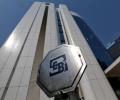
The Securities and Exchange Board of India (Sebi) plans to roll out a new regulatory framework for registrar and transfer agents (RTAs) - the market intermediaries responsible for the record-keeping of bondholders and shareholders after a company offers securities to the public. The markets regulator, sources said, is considering a multifold increase in net-worth requirement, a move that may dissuade companies from having in-house RTAs for record-keeping. At present, the minimum net worth required for RTAs is Rs 50 lakh and Rs 25 lakh in categories I and II, respectively.

Asset Management Companies (AMCs) demonstrated improved business metrics in the first quarter ended June 2023 (Q1FY24), but a sharp run-up in stocks leaves little room for further upside in the immediate term, say analysts. During this quarter, HDFC AMC reported a 10 per cent year-on-year (YoY) rise in revenue from operations at Rs 575 crore. Nippon India's revenue from operations went up 12 per cent to Rs 354 crore.

Mutual funds (MFs) have stepped up equity purchases after staying on the fence for over two months. Their net equity investments reached a four-month high of Rs 7,700 crore in July, rising for the fourth consecutive month after withdrawing a net of Rs 5,100 crore in April 2023. This trend continued in August, with net investments of Rs 3,400 crore in the first three trading sessions, according to data from the Securities and Exchange Board of India.

Mutual funds recorded Rs 7,600 crore net inflows into active equity schemes in July even as redemptions surged to a 30-month high of Rs 30,400 crore owing to profit booking, reveals data from the Association of Mutual Funds in India (Amfi). Equity net inflows were 13 per cent lower compared to the preceding month's tally. The inflows were supported by a strong flow from retail investors through the systematic investment plan (SIP) route.

Diwali fireworks are expected to continue on Dalal Street next week, with four companies collectively seeking to mobilise over Rs 6,600 crore through initial public offerings (IPOs). In terms of the amount raised, this is poised to be the busiest week of calendar year 2023. Tata Technologies (Tata Tech), a subsidiary of Tata Motors, could lead the charge with an IPO projected to be over Rs 2,900 crore. This will mark the first maiden share sale by a Tata Group firm in nearly two decades.
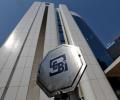
Capital markets regulator Sebi has penalised stock exchanges -- BSE and NSE -- for "laxity" on their part in detecting misuse of clients' securities worth Rs 2,300 crore by Karvy Stock Broking Ltd (KSBL). In two separate orders, the Securities and Exchange Board of India (Sebi) has imposed a fine of Rs 3 crore on BSE and Rs 2 crore on NSE. The matter relates to KSBL misutilising client securities worth Rs 2,300 crore, belonging to more than 95,000 clients, by pledging them from just one demat account. The funds raised against the pledge were used by KSBL for itself and its group entities.

The Centre has no objection to a proposal for setting up a panel of domain experts to look into strengthening the regulatory mechanisms for the stock market, the Supreme Court was told on Monday while it was hearing pleas relating to the Adani stocks rout after the Hindenburg report. The central government, however, told a bench headed by Chief Justice DY Chandrachud that it wanted to give the names of the domain experts for the committee and the scope of its mandate in a sealed cover in larger interest.

Regulatory capacity, hyperactivity and excessive prescription are the biggest challenges the financial sector is facing, said Meleveetil Damodaran, former chairperson, Securities and Exchange Board of India (Sebi). Speaking at the Business Standard BFSI Summit on Wednesday, Damodaran highlighted the need for simpler, clear, and continuous regulations in the financial sector. He opined that the industry had felt it challenging to keep pace with the changing regulations.

It has been a slow 2022 thus far for the primary markets. In the last 8 months, only 16 companies have raised Rs 40,311 crore via the initial public offer (IPO) route, data from PRIME Database suggests. In comparison, 63 companies had raised a cumulative Rs 1.18 trillion via the IPO route in 2021. A large part of the funds raised in 2022 were on account of the two IPOs - Life Insurance Corporation of India (LIC) and logistics firm Delhivery - that raised a total of over Rs 26,000 crore between themselves.

'If equities perform well in a year, withdraw money from equities. If the equity market is down, shift withdrawal to the debt portion.'

Those who cannot bear significant downturns (as much as 40 per cent) or have a short horizon should exit entirely.
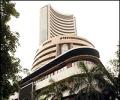
The National Stock Exchange listed the Dow Jones Industrial and S&P 500 on its platform last week.

The securities regulator's approval for the first US-listed exchange traded funds (ETF) to track bitcoin has given Indian cryptocurrency companies hope that the move would create domestic support for the digital assets. The US Securities and Exchange Commission (SEC) on Thursday approved 11 ETFs for bitcoin, perhaps the most popular virtual currency. It would enable investors to access bitcoin without challenges such as setting up wallets or accounts with crypto exchanges that have previously suffered cyberattacks or implosion.

New-age tech tools and 'mystery shoppers' are helping the country's top bourse stay ahead of the curve against dabba trading platforms and entities dolling out unsolicited investment tips. In the past one month, the National Stock Exchange (NSE) has issued close to two dozen warnings and advisories against such activities. "We saw a rise of dabba trading or illegal trading platforms after the pandemic.
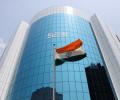
The rumour verification process would now be triggered by changes in price or 'material price movements', as the paper defines it. What this means is that companies would need to verify rumours only if the share price moves significantly.

Sebi Chairman U K Sinha has often chastised listed companies for not having enough women on their boards.
 © 2026 Rediff.com - Advertise with us - Disclaimer - Privacy Policy - Sitemap - Feedback - About us - Terms of use - Grievances